
Ícaro Maiterena
 ” style=”object-position:50% 0%” data-object-fit=”cover” data-object-position=”50% 0%” >
 ” style=”object-position:50% 0%” data-object-fit=”cover” data-object-position=”50% 0%” >
Curriculum Vitae
Ícaro Maiterena, born in Madrid in 1978, is an artist who masters different artistic languages, including sculpture, drawing, engraving, video creation, experimental film, photography, scenography, circus and dance.
He holds a Bachelor of Fine Arts from the University of Madrid UCM and is trained as an Advanced Technician in Applied Arts in Sculpture.
He is an art educator and teacher in different educational centers, member and co-founder of Colectivo Lisarco, an association of professionals from different artistic disciplines that designs and develops collective artistic and educational projects.
He is a member of the International Academy of Ceramics (IAC).
Ícaro has participated in numerous group and solo exhibitions in Spain, Korea, Switzerland, Palestine, France, the United Kingdom, Russia, Italy, the United States, Portugal, the Netherlands and Latvia.
He has won numerous awards, including the recent 2nd prize at the “XVIIIe Prix International de la Céramique Contemporaine” (2023) and the Brukner Foundation award (2022).
Inspiration
Ícaro is inspired by mountain formation, the geological processes that deform, break and fold the earth’s crust, and create folds due to great compressive stresses.
He is also inspired by habitats and architectures created by animals and micro-organisms, the metamorphoses and transformative phases of life, the construction of a gigantic ant nest, the constructions made by bees, the dung beetle, by a river of lava flowing from a volcano, fungi or parasites growing on the bark of a tree or on the skin of a living being.
Ícaro is fascinated by playing with scale, moving between micro and macro to discover the infinite worlds that exist in the world we live in.
Technique
Nature never does anything without reason, and neither does Icaro Maiterena.
The compositional elements follow an overwhelming logic, in various ways, especially when we see how some pieces seem pressed or crushed.
The choice of materials is part of the story of the work. He is interested in ceramics as a process and not as an object. He does not have a method that he always applies in the same way, even though the steps to follow are always the same and must be followed with respect.
He experiments with metal salts, oxides, buries pieces or covers them with plant material. There is the reference to the transformation that occurs during a volcanic process and there is a lot of daring in the choice of oxides, salts, slips and glazes.
Where his works used to be more monochrome, in recent years he has used a lot of iron chloride, a metal salt that occurs naturally in molisite, a mineral in fumaroles of active volcanoes. With this metal salt he can give sculptures purple, brown, orange, ochre and red tones. Iron oxide is one of the most abundant minerals on our planet and it is present in every imagination we have about the landscape.
He also works with rosemary, an aromatic plant responsible for metallic reflections of ceramics.
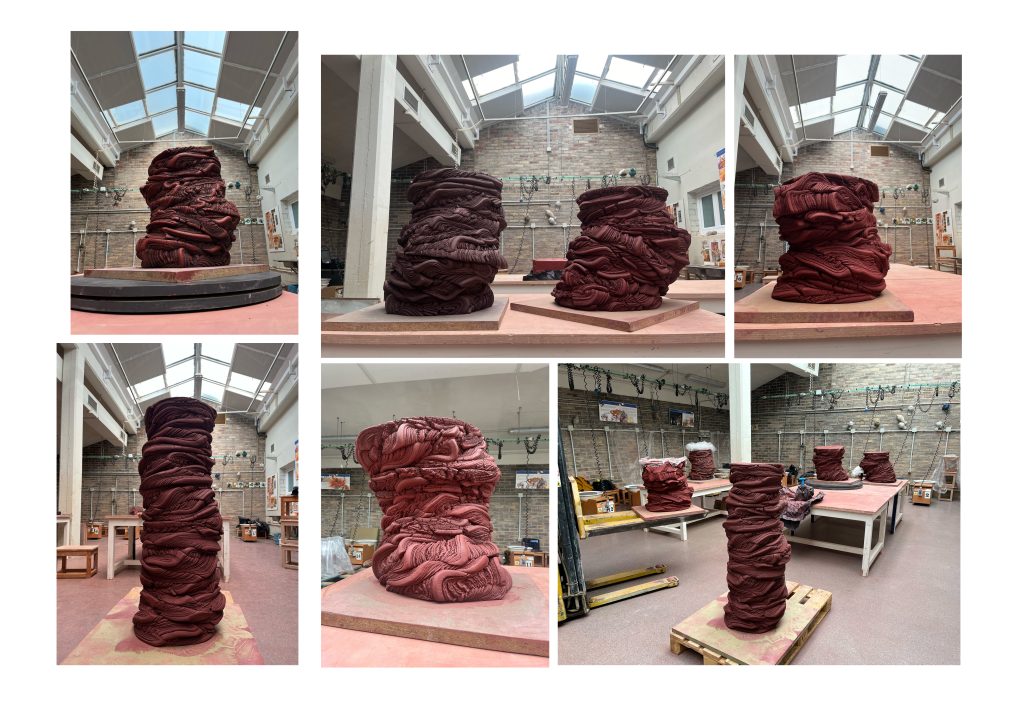
Showing all 6 results
-
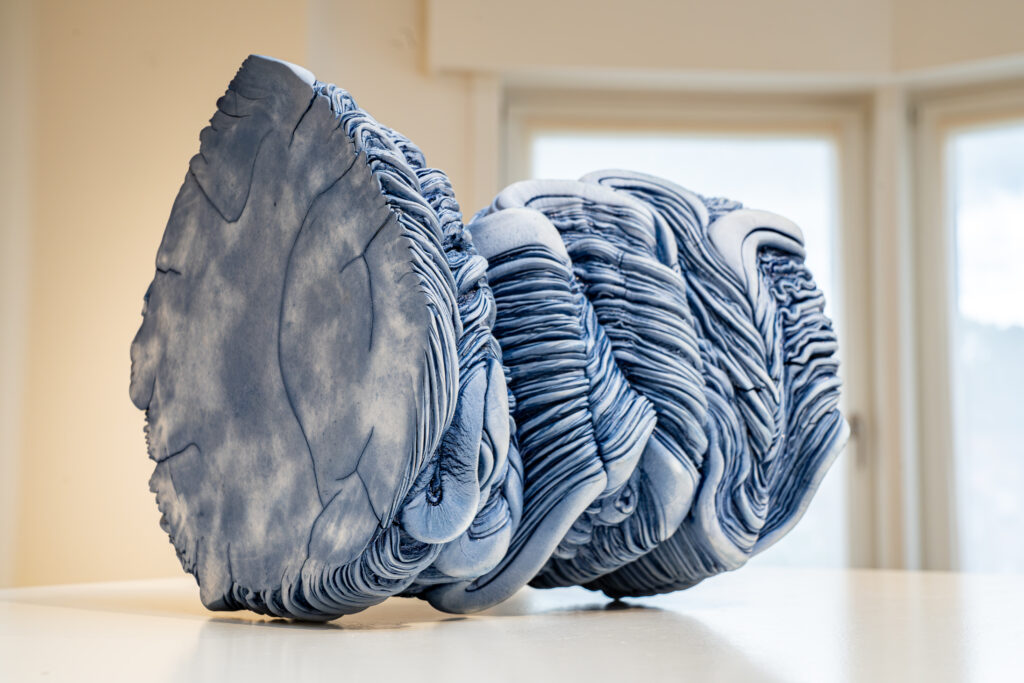
Turbulencia Fosilizada V
€ 2.850,00 vat included -
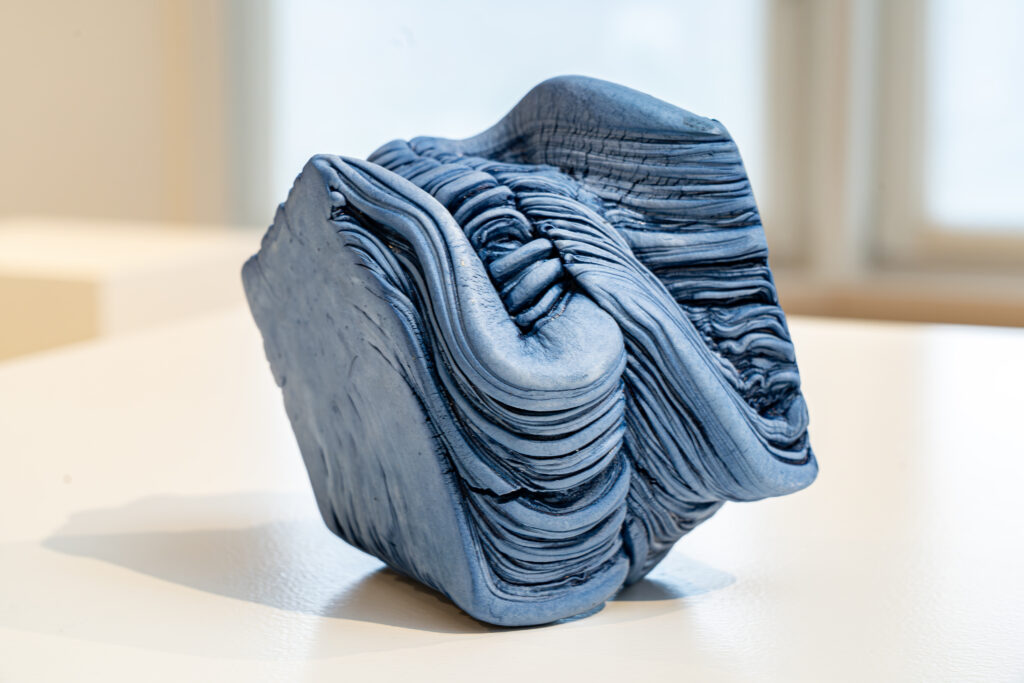
Turbulencia Fosilizada VI
€ 750,00 vat included -
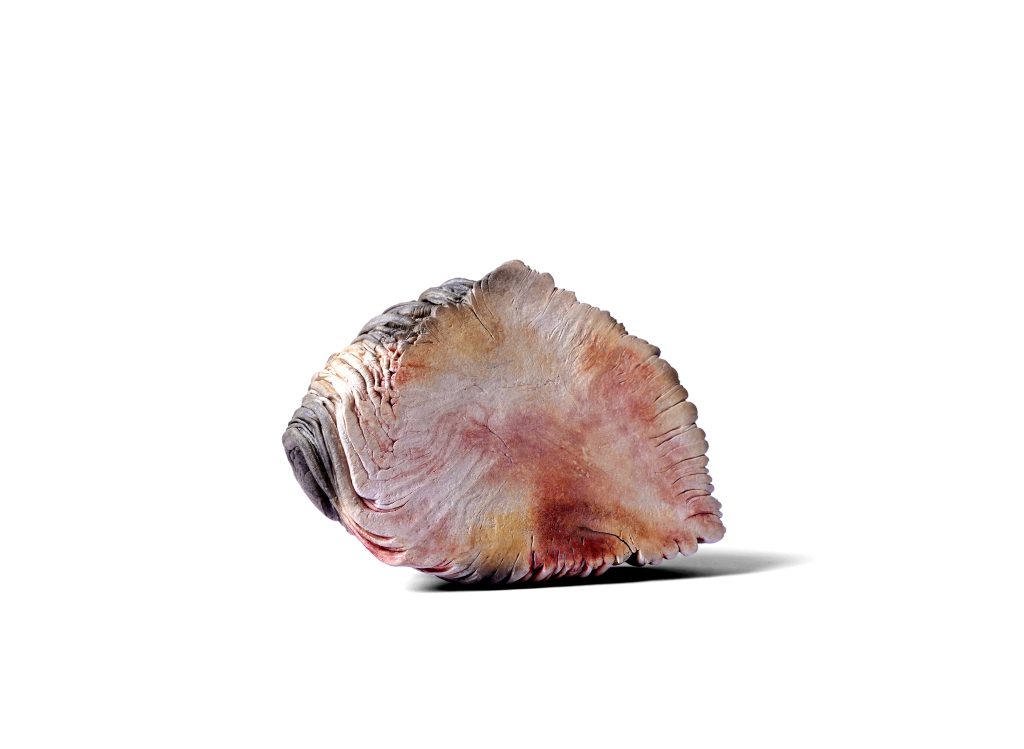
Pli Tectonique I
-
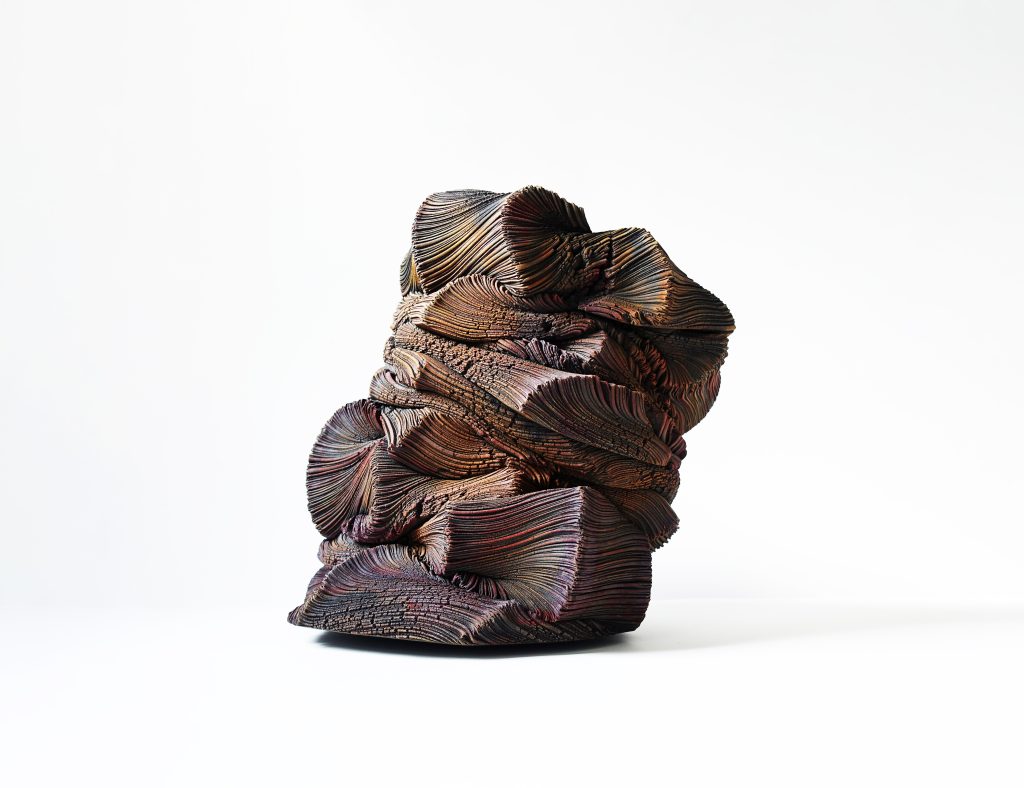
Territoires en résistence V
€ 6.580,00 vat included -
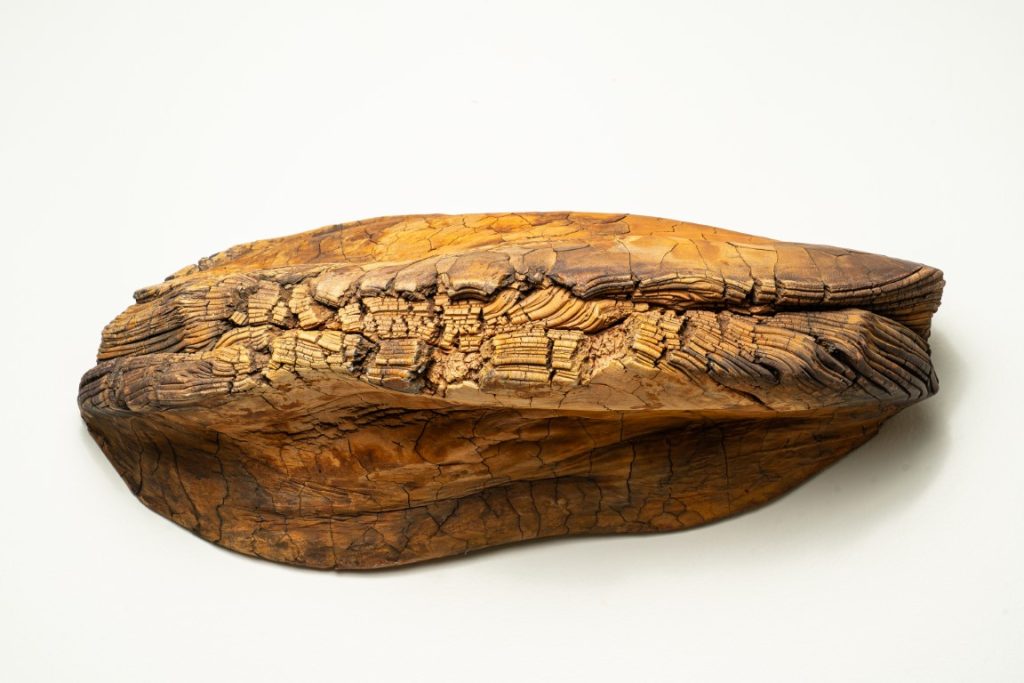
Transmutation Polyporus Fomentarius I
-
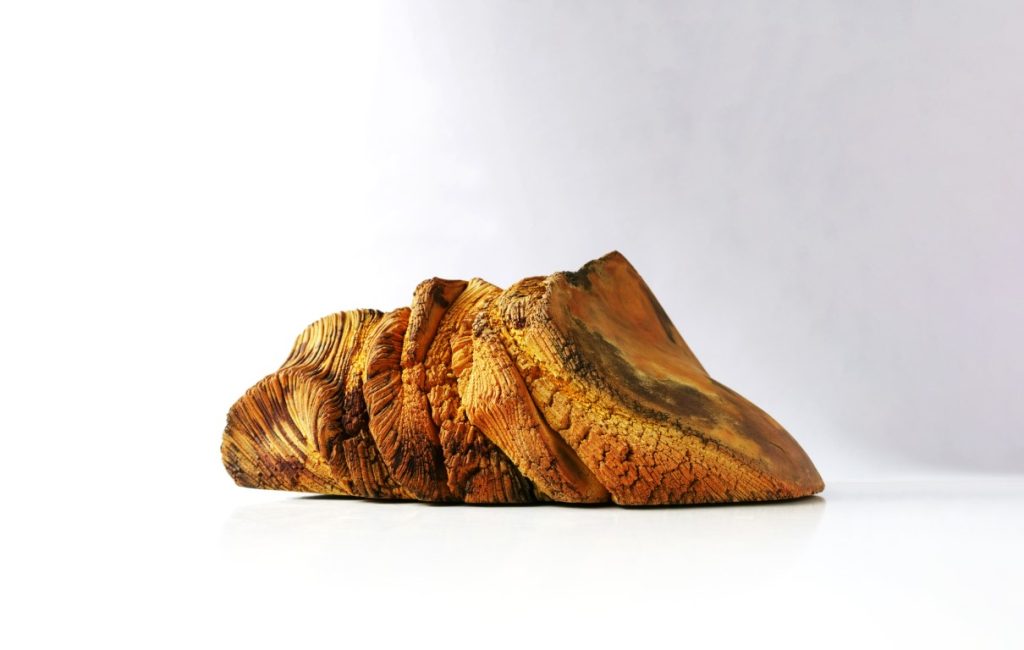
Transmutation Fossile II
€ 5.430,00 vat included