Ule Ewelt
 ” style=”object-position:50% 0%” data-object-fit=”cover” data-object-position=”50% 0%” >
 ” style=”object-position:50% 0%” data-object-fit=”cover” data-object-position=”50% 0%” >
Curriculum Vitae
“I’ve been modelling animal sculptures since the age of 14.
After studying geography and working for a few years in a town planning office focused on nature conservation, my path led me back to my roots: intensive and professional occupation of the earth since 2003.
Until 2011, I made stoneware tableware, but also sculptures, always in search of the inner being of animals and what connects us humans to them.
I exhibit internationally in galleries, museums and potters’ markets, mainly in France and Italy, and have pieces in numerous private collections.”
1967 Born in Gießen, Hessen (Germany)
1990 Degree in dressmaking
1997 University degree in geography
1997 – 2002 Landscape planner
2003 Workshop in Grünberg-Stangenrod, Hessen, focus on utilitarian objects
2006 Hessische Keramikerinnung
2011 Shooting of figurative works
2014 Angewandte Kunst Hessen e.V.
2014 – 2022 BK, Bundesverband Kunsthandwerk e.V.
2016 – 2019 Founding member and board member keramik-hessen e.V.
Inspiration
The Latin word anima means soul, animate beings, life, but also breath of air, wind and breath.
The word animal for living beings, creatures, derives from it.
For as long as man has existed, he has lived in a world inhabited and shaped by animals.
They have been a source of food, competitors for food and a threat.
It is my intention to take the viewers of my work back to the time of prehistoric man, who created impressive works of art on an inner impulse.
I would like my animal sculptures to appeal to the emotional and instinctive level of the viewer and build a bridge to the unconscious that has roots in our origins.
In this hidden world we are one.
Technique
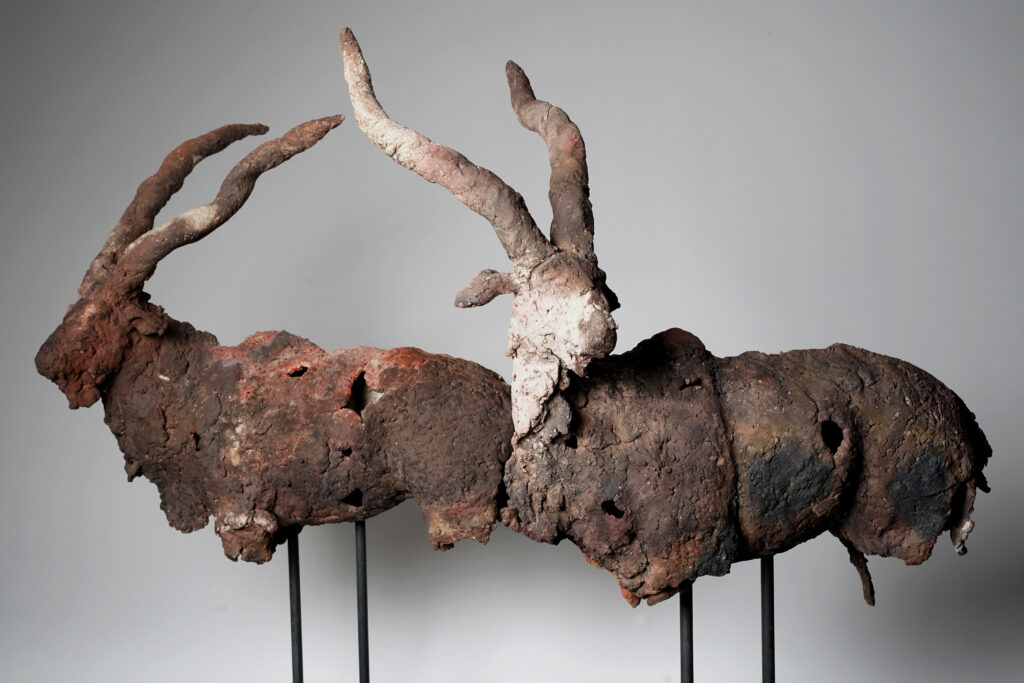
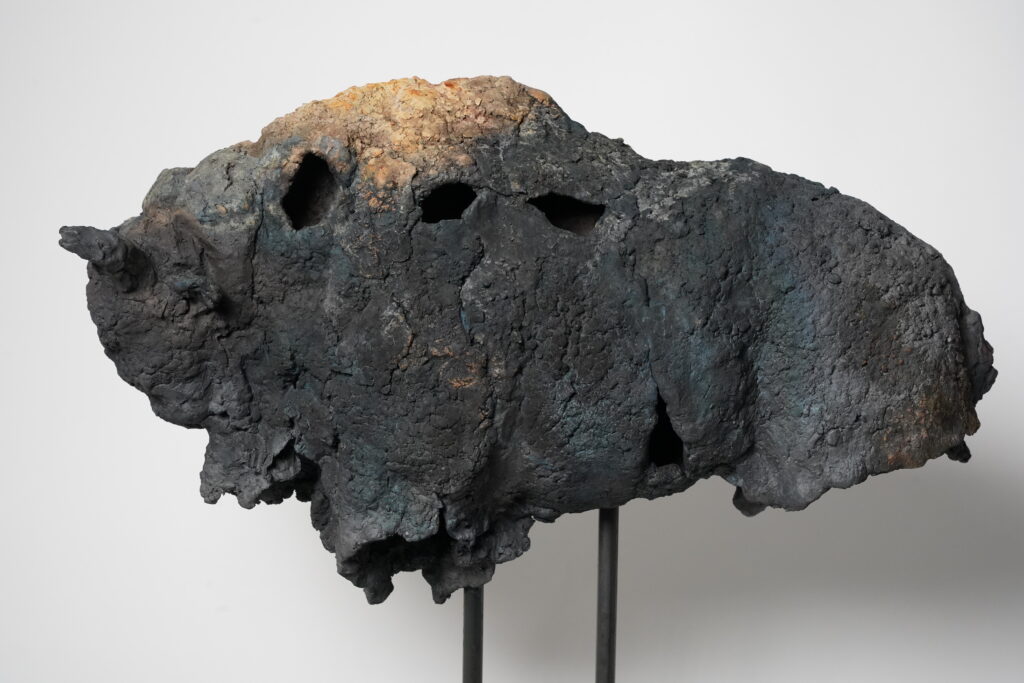
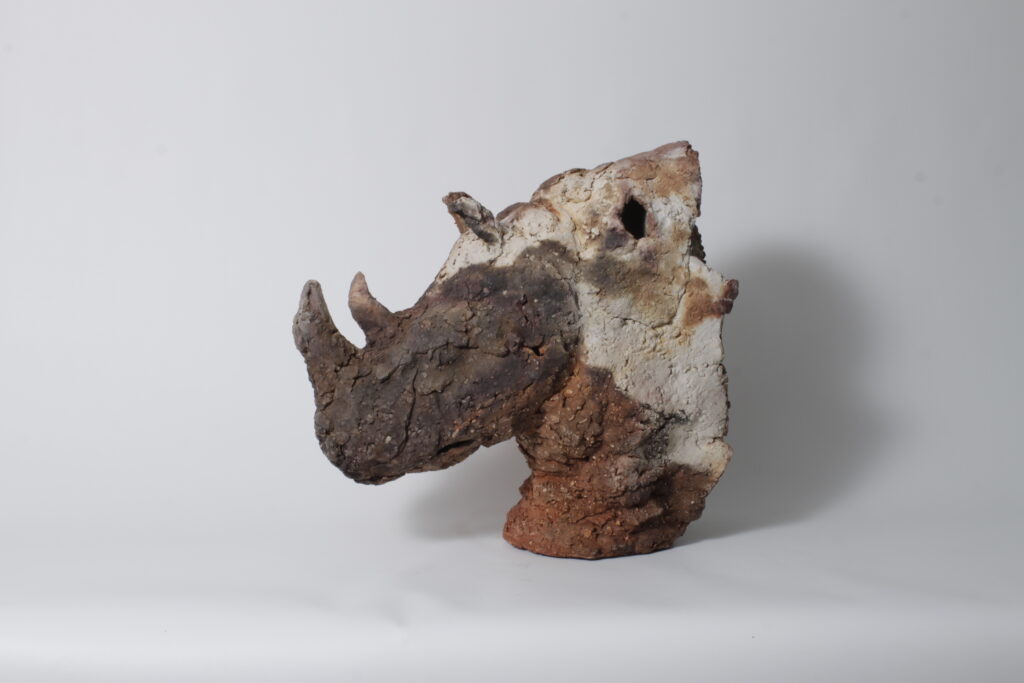
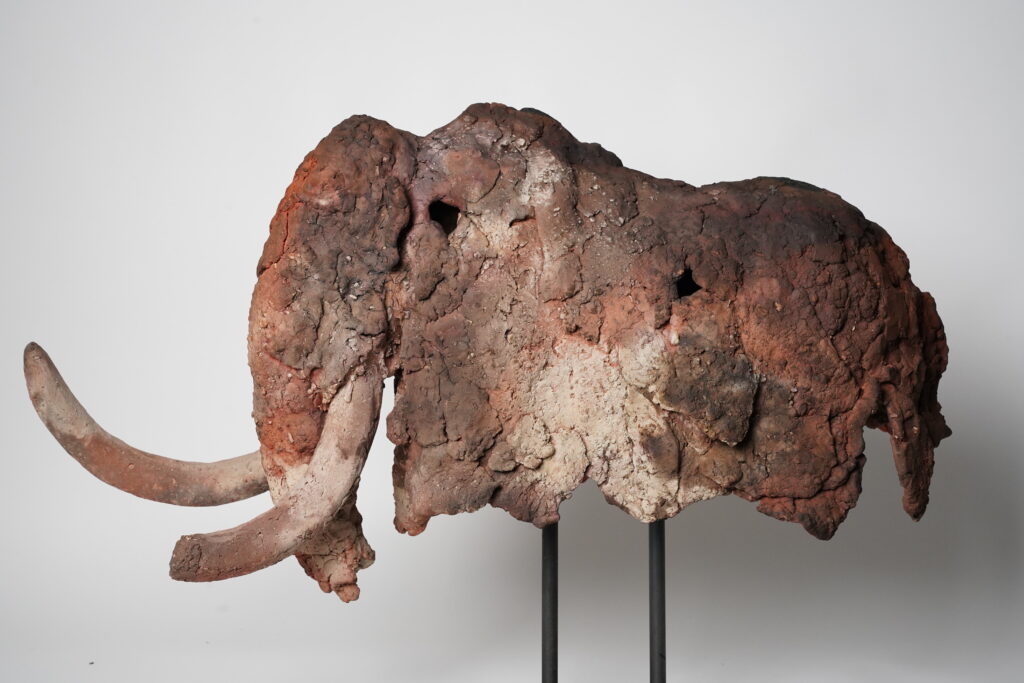
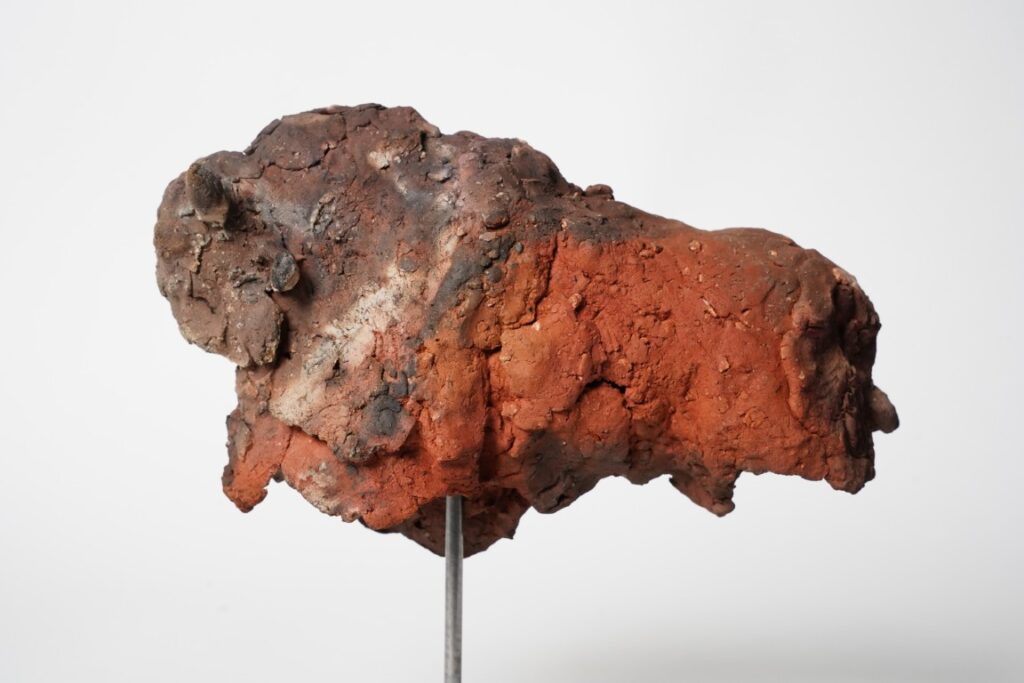
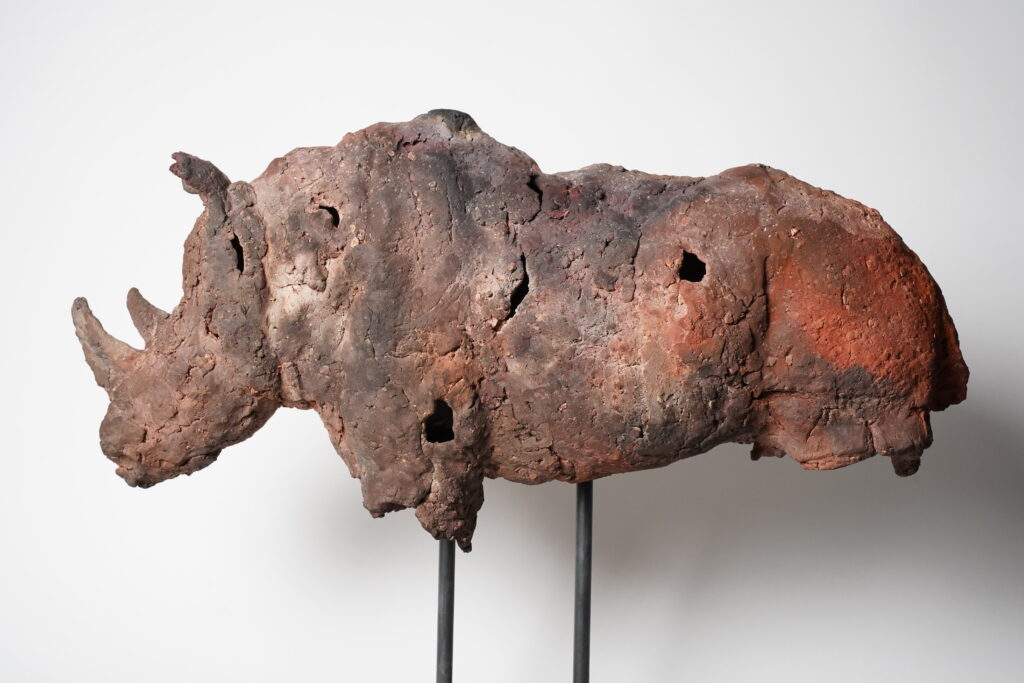
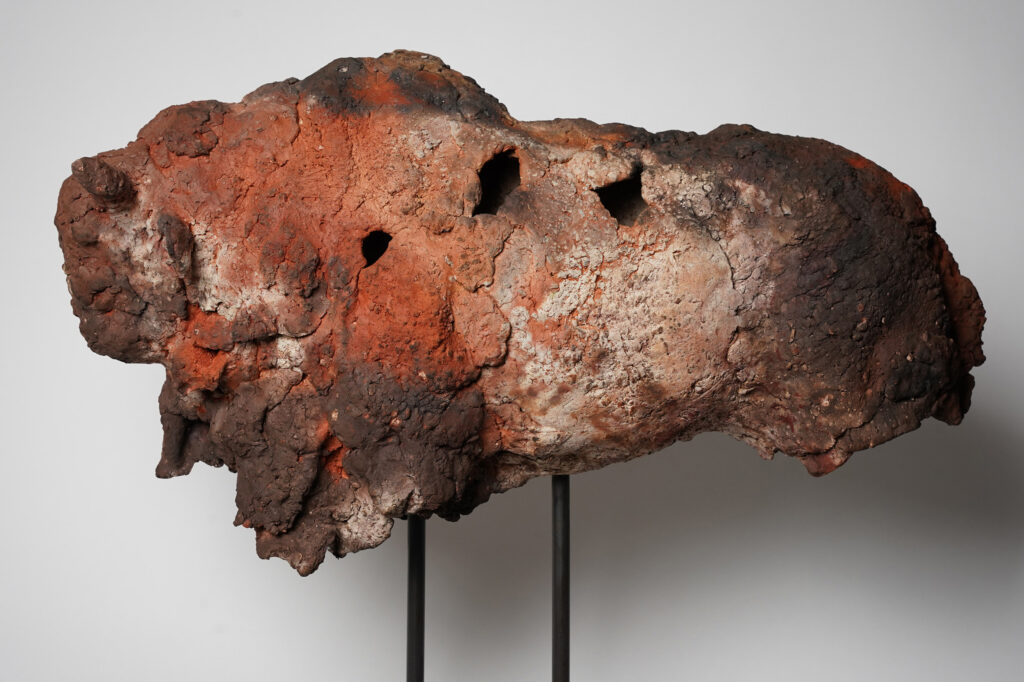
Ule designs pieces with a raw, oxidised look.
The first step is to draw her models in her small notebooks, which are handy to take with you when you go out to meet the animals. Ule also visits excavation sites in the company of archaeologists, or sites such as the Chauvet cave, to observe more and more cave paintings at close quarters, before adding to her gallery of images with videos and books.
‘I start drawing to understand the anatomy of animals and how they move. Then I close my sketchbooks and leave the drawing aside to try and express just the soul and expression of the animal. … I work instinctively to find the animal’s true interiority, to show it in its world with a little movement that hints that the animal is going to move, that it is going to move’.
She works in white clay with chamotte and fires her pieces in a brick kiln for 12 hours long, in which she piles branches, sawdust, straw and dead leaves.
(source: La Revue de Céramique et du Verre n° 259)
Showing all 8 results