Liliane Van Asselberghs
 ” style=”object-position:50% 0%” data-object-fit=”cover” data-object-position=”50% 0%” >
 ” style=”object-position:50% 0%” data-object-fit=”cover” data-object-position=”50% 0%” >
Curriculum Vitae
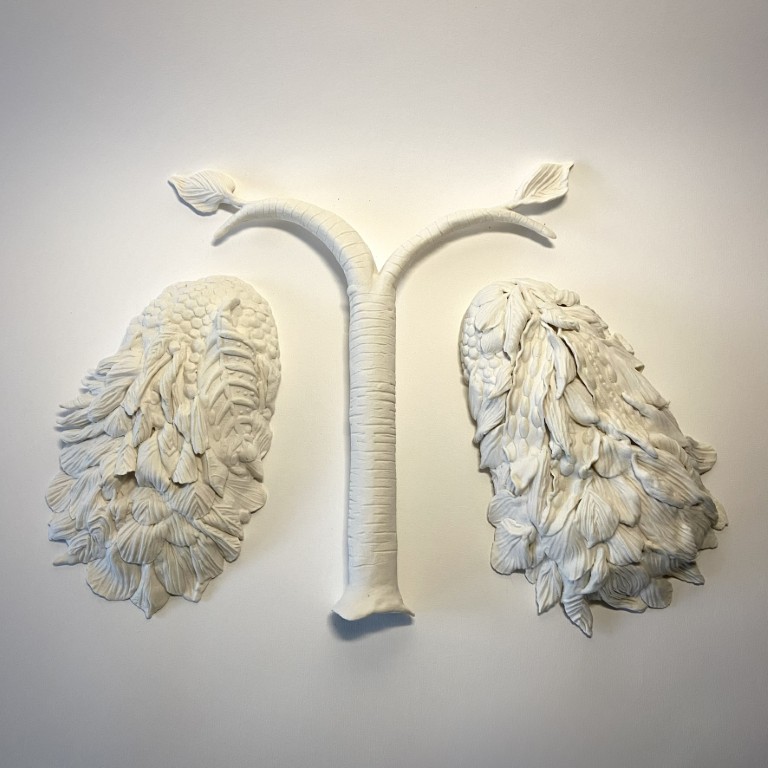
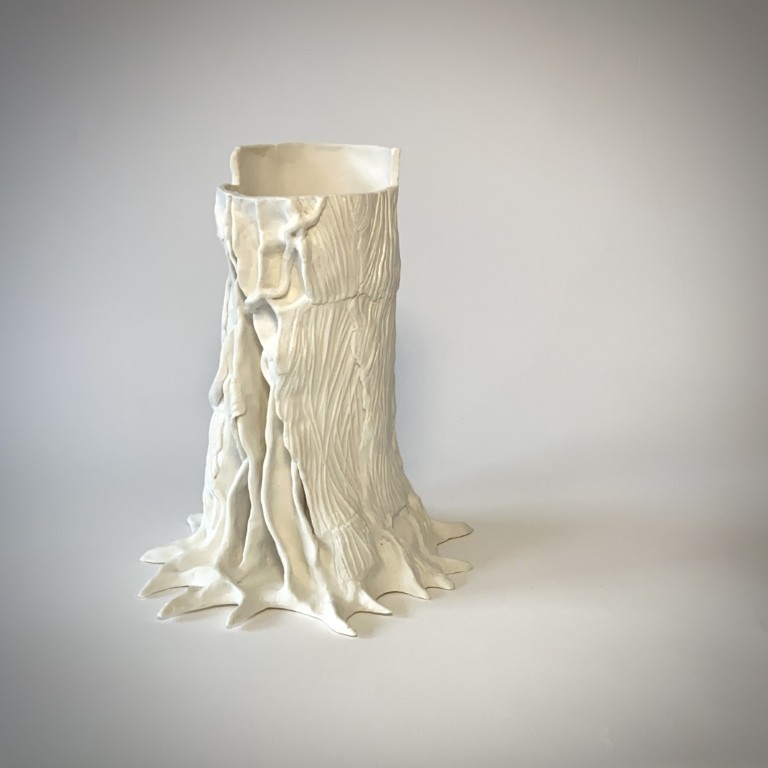
Liliane Van Asselberghs is a Belgian ceramic artist who has worked with clay since childhood. Her practice is grounded in strong craftsmanship combined with a distinctly investigative approach. Her work is deeply rooted in ongoing reflections on nature, the environment, climate change, and the impact of human activity on the landscape.
She completed a higher education programme in which she specialised not only in printmaking but also in ceramics and glass art. This multidisciplinary background fuels her current practice, where material research, craft, and ecological themes intersect. For the past two years, she has been working in a larger studio, giving her space for experimentation, focus, and working on a bigger scale.
Alongside her autonomous practice, she taught ceramics for many years at the Academy of Ronse, passing on her expertise and passion to new generations of artists.
Inspiration
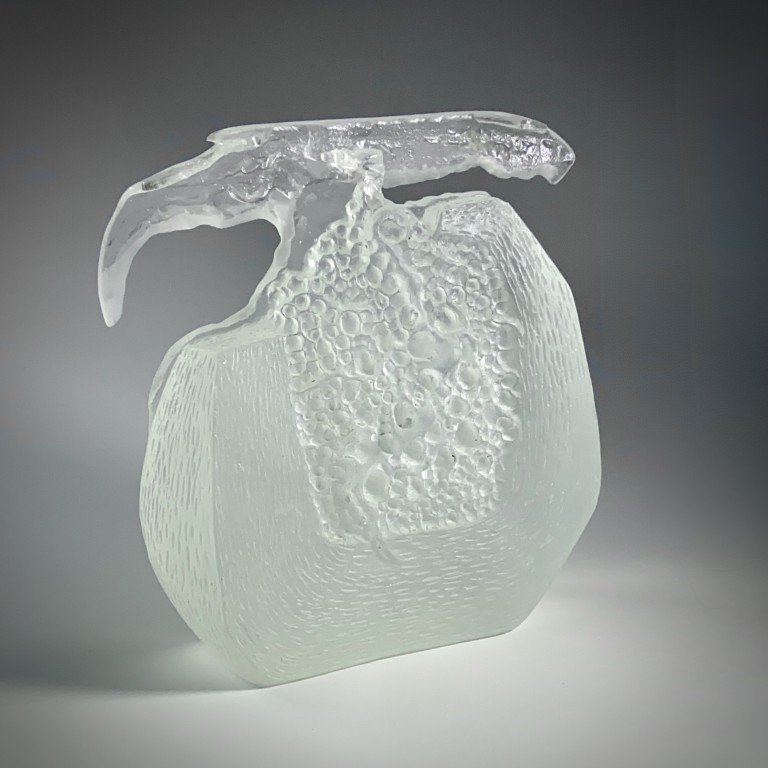
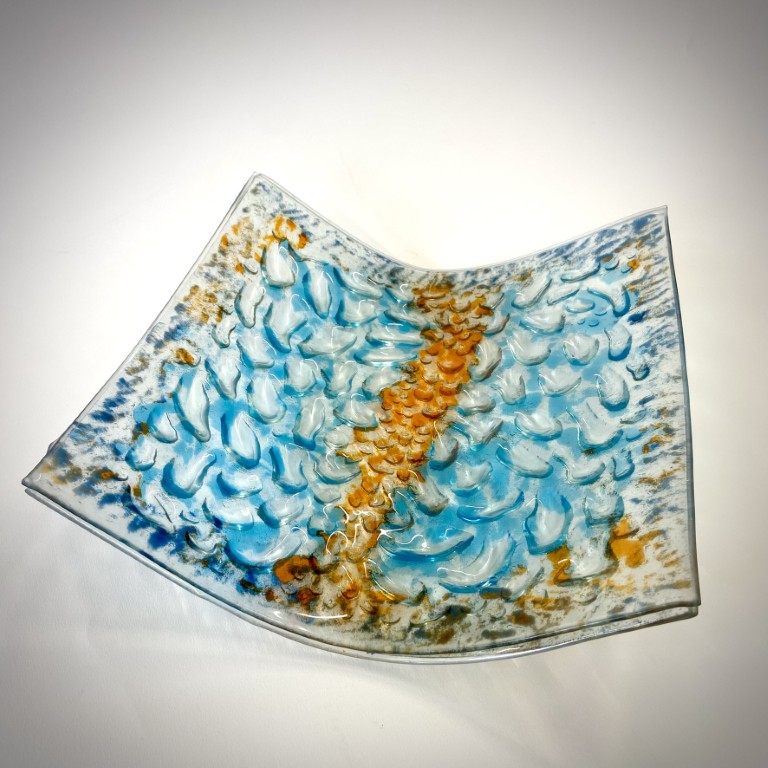
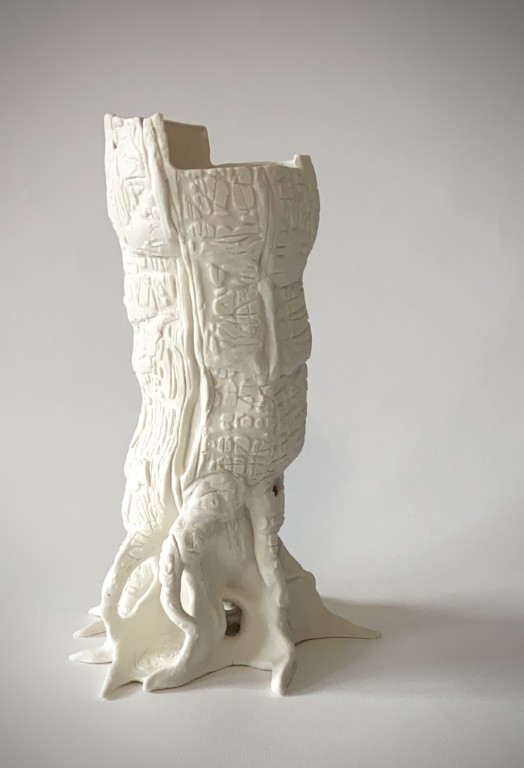
Conceptually, Van Asselberghs explores ecological vulnerability, climate change, and geological processes on two interconnected scales. On a microscopic level, surfaces, cracks, structures, and imprints evoke fragile ecosystems and natural patterns. On a macroscopic level, landscapes, erosion, ice masses, and shifting geological layers resonate through her work. Rather than illustrating these phenomena, her sculptures function as material reflections on the delicate balance between humans and nature.
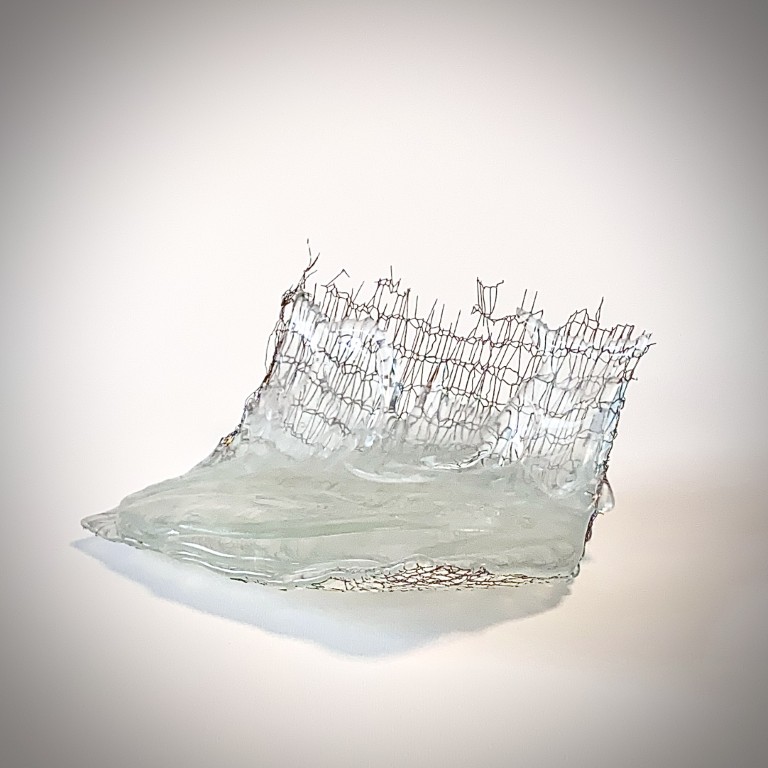
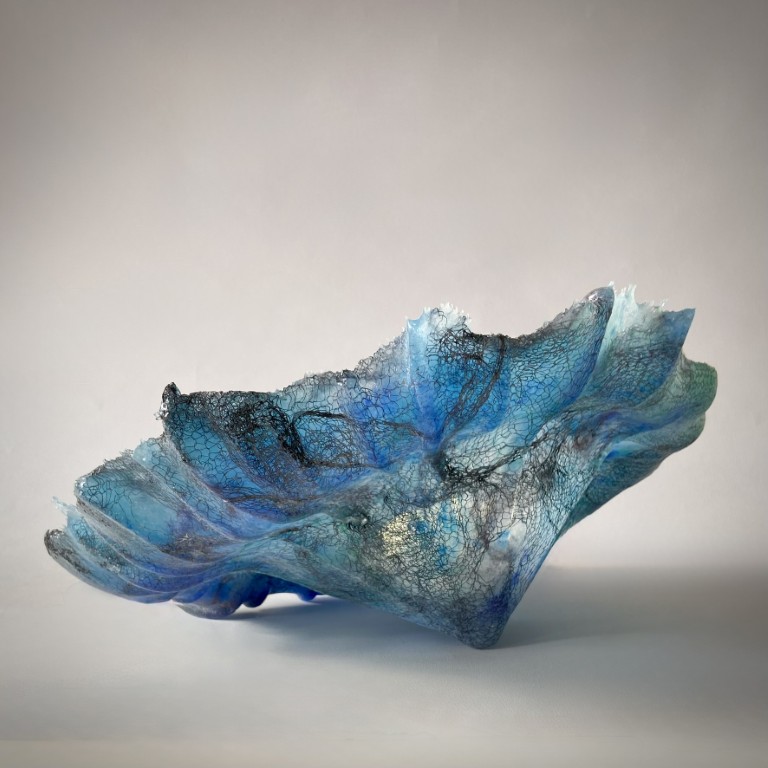
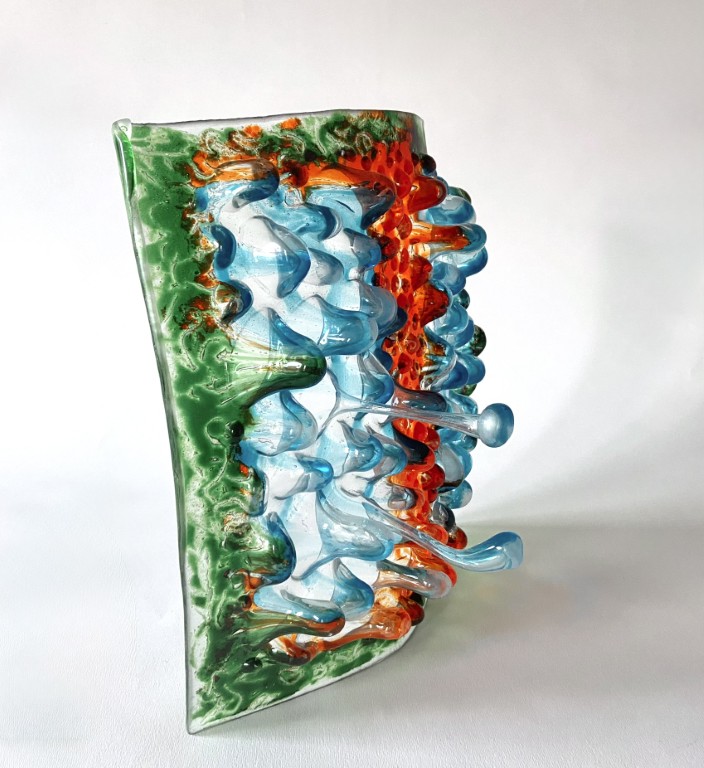
In addition to ceramics, she investigates the possibilities of glass combined with copper wire and pigments. In this experimental practice, she applies knitting and crochet techniques, allowing glass and wire to fuse during firing. The molten glass moves through the openings of the copper mesh, introducing chance, tension, and transparency into the work.
These processes deliberately mirror the unpredictability of natural forces.
Technique
Van Asselberghs primarily works with flax porcelain, shaping each piece entirely by hand. She employs techniques such as slab building, rolled clay, solid and hollow forms, pinching, relief, and layered textures. Texture is a key element in her visual language and is created using linocut impressions and found materials with relief.
Each piece undergoes a two-stage firing process: an initial firing at 1100°C, followed by a high firing at 1240°C. She deliberately chooses a restrained and minimal use of colour. By largely omitting colour, she creates a visual language of silence, slowness, and stillness, in which form and surface take centre stage.
Her sculptures allow for multiple modes of presentation and can be displayed both on pedestals and as wall-mounted works.
Showing all 8 results