Tjok Dessauvage en Frans Vercoutere
 ” style=”object-position:50% 0%” data-object-fit=”cover” data-object-position=”50% 0%” >
 ” style=”object-position:50% 0%” data-object-fit=”cover” data-object-position=”50% 0%” >
Curriculum Vitae
Tjok Dessauvage (born 1948) is one of Flanders’ most celebrated ceramic artists, internationally acclaimed and widely awarded for his exceptional body of work. He studied at Sint-Lucas in Ghent, where he discovered ceramics, wheel-throwing and glazing. After a brief period of figurative sculpture, he devoted himself entirely to thrown forms, creating sculptural pot shapes that refer to the archetype of the pot without fulfilling its function. His work, shown worldwide, reflects deep mastery and continuous exploration.
Frans Vercoutere (born 1955) lives and works in Meulebeke, where he is dedicated to painting. He studied Fine Arts at the VTI in Kortrijk and at Sint-Lucas in Ghent. His work has been presented in numerous solo exhibitions (including at Galerie Lloyd, Valcke Art Gallery, 10a Otegem, Kosmo Poperinge and Stek-art Torhout), and he has participated in various group exhibitions in Belgium and the Netherlands. A significant part of his oeuvre has also been shown in contexts such as De Queeste in Watou and the In Flanders Fields Museum.
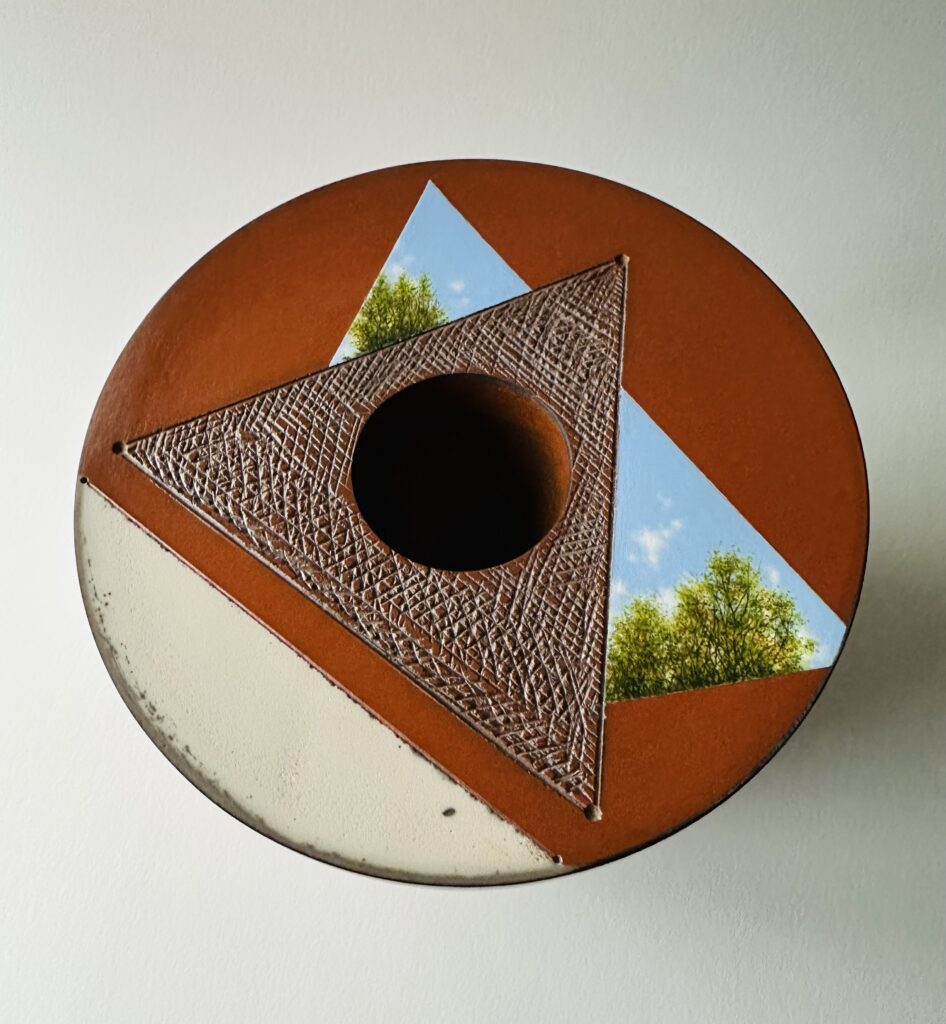
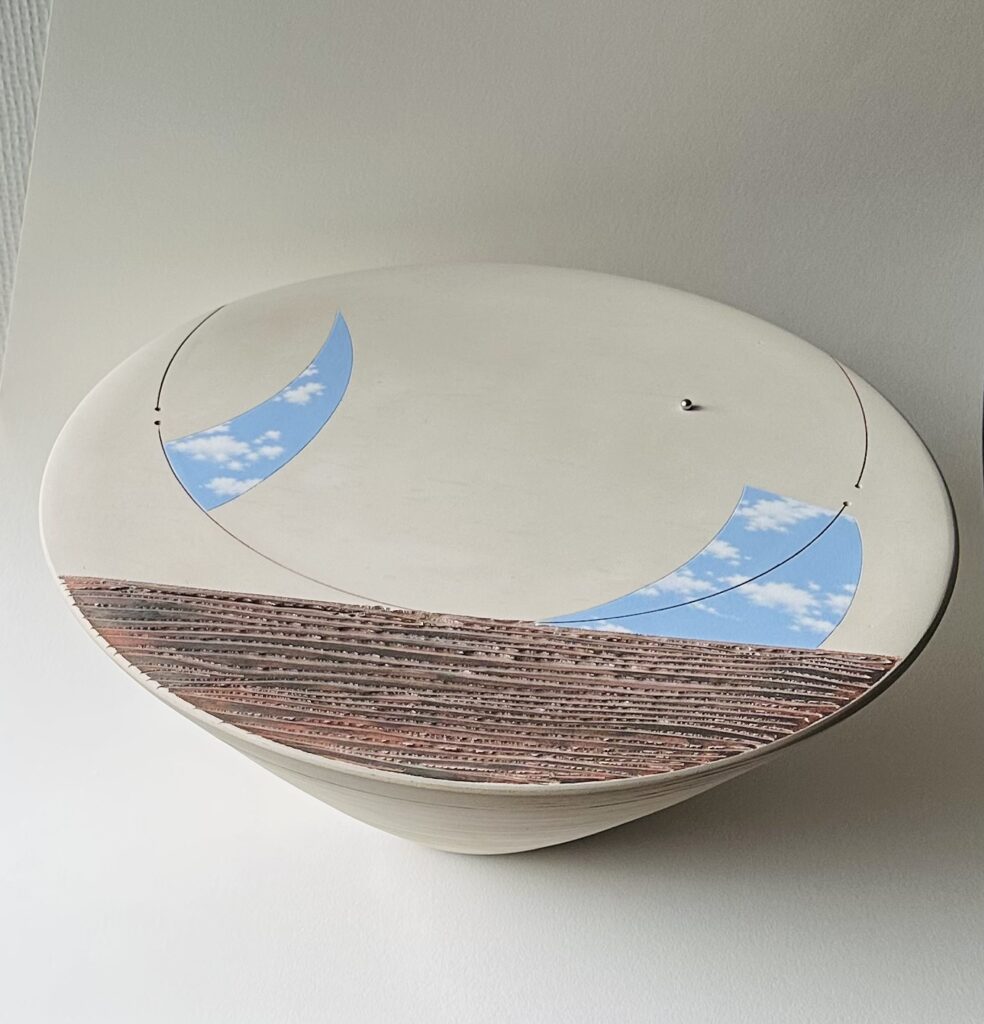
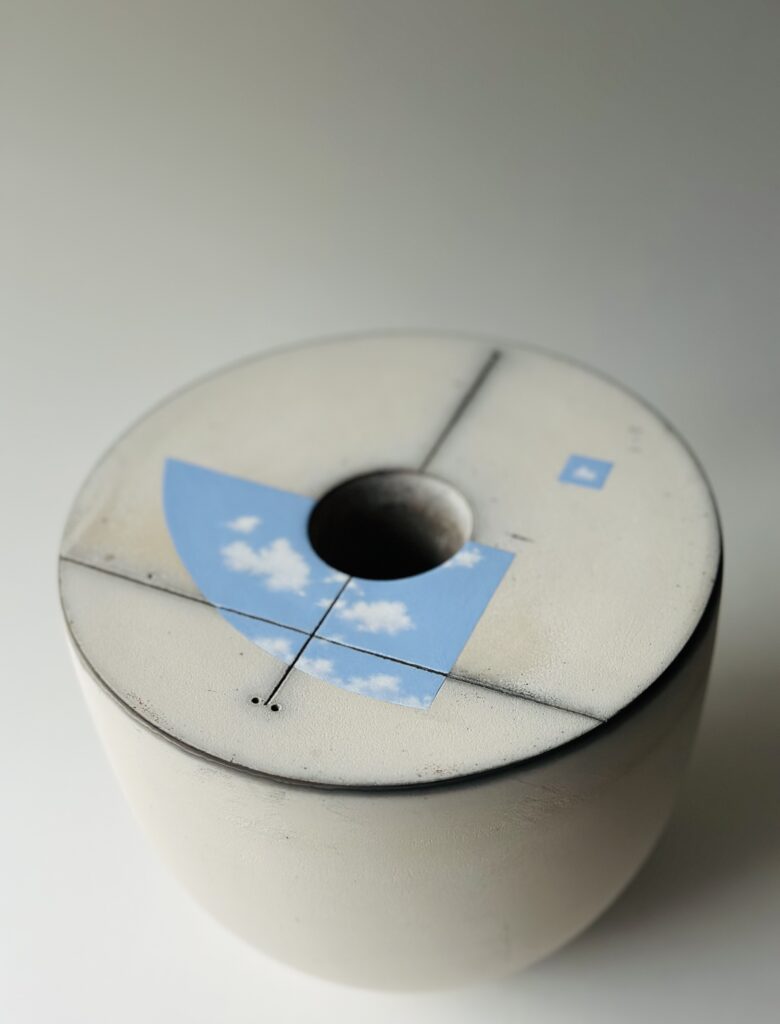
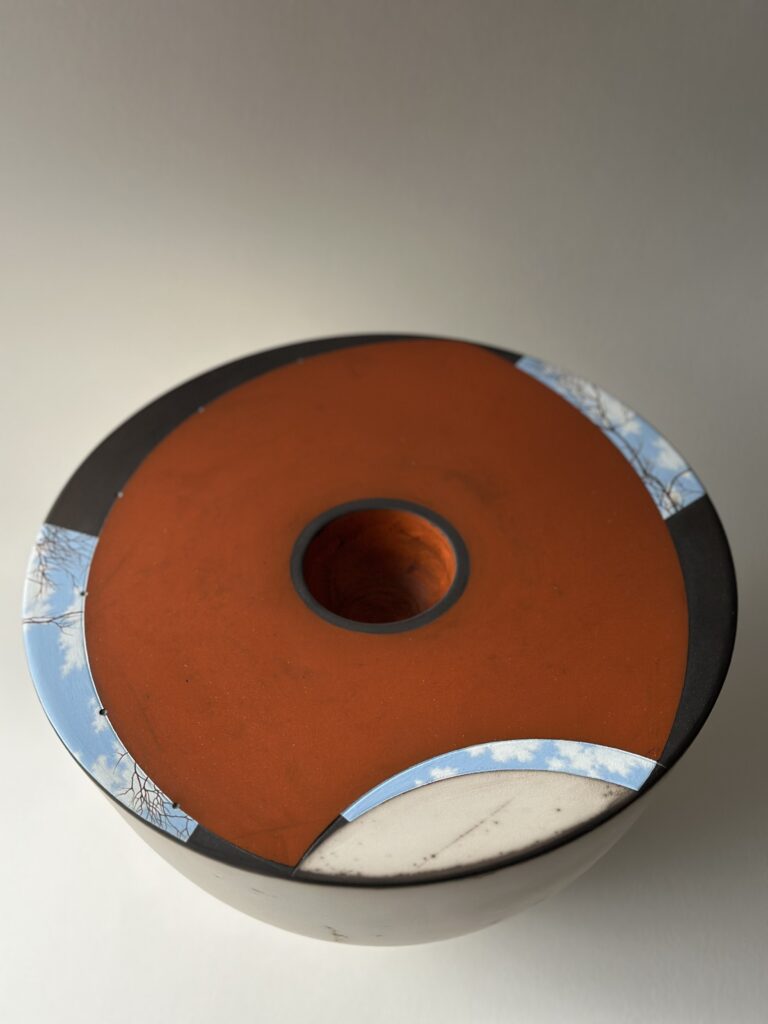
The two artists share a keen eye for detail, for traces, structures and the poetry of small things. Their collaboration unites Dessauvage’s ceramic forms with Vercoutere’s painted skies.
Inspiration
Between Earth and Sky: A Dialogue in Clouds and Clay
Tjok Dessauvage draws inspiration from archetypes and patterns: organically grown city structures, labyrinths, electrical diagrams, the golden ratio, worm tracks in old wood, as well as impressions from his travels — from the starry skies of Brittany to wind-shaped traces in the Sahara. He sees his pots as information carriers, “relics” that capture fragments of energy, thought or behaviour.
Clouds and skies have long held a central place in Frans Vercoutere’s work. His landscapes are filled with soft, bright clouds drifting across a clear blue sky, untouched by any hint of threat. Yet this seeming innocence is intentional: Vercoutere uses his idealized sky to lift his painted world out of time. Beneath the idyllic scenes and playful assemblages lie philosophical ideas and reflections that resonate across eras.
In their collaboration, these worlds meet: the earthy, structured forms of Dessauvage converse with the airy, open skies of Vercoutere.
Technique
Tjok Dessauvage is a master of wheel-throwing and terra sigillata, an ancient technique in which fine clay slip is applied in thin layers and polished to a soft, lasting sheen. He works with photographic transfers, incised lines, rubber clichés, thermal etching, drilling, and sometimes clay mixed with coffee grounds to enrich the surface texture. After a biscuit firing in an electric or gas kiln, the pieces are smoked in a metal muffle or reduced in a wood-fired kiln.
Frans Vercoutere paints his skies directly onto the ceramic surface, using paint that is fixed rather than fired. His contribution adds a second narrative layer, a painterly commentary that intertwines with the signs and traces Dessauvage has embedded in the clay.
Together, they create objects that merge sculpture, ceramics and painting: forms that are no longer pots, skies that are no longer landscapes, but stories — grounded yet ethereal, earthly yet celestial.
Showing all 4 results