
Vinça Monadé
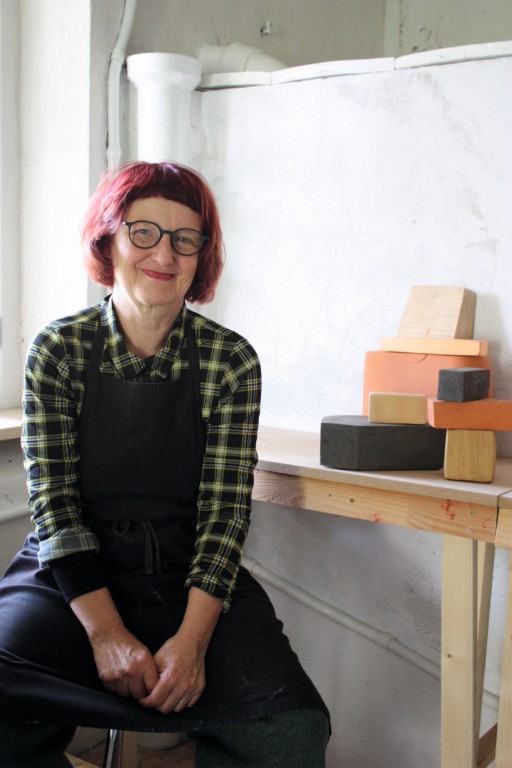 ” style=”object-position:50% 0%” data-object-fit=”cover” data-object-position=”50% 0%” >
 ” style=”object-position:50% 0%” data-object-fit=”cover” data-object-position=”50% 0%” >
Curriculum Vitae
Vinça Monadé develops an artistic practice that moves between drawing, printmaking and ceramics. Her work has evolved from two‑dimensional compositions to three‑dimensional forms, continually seeking a balance between abstraction and references to the visible world. The shift toward ceramics marks a return to the material origins of her inspiration: earth, landscape and the physical presence of form.
For more than fifteen years, this French artist has cultivated a practice that connects drawing, printmaking, ceramics and publishing, exploring the tensions between gesture, structure and organicity. Each series emerges from a dialogue between formal rigor and intuitive impulses, with line, colour and texture becoming carriers of energy and rhythm.
Her trajectory includes numerous solo exhibitions in France, Belgium, Switzerland and Japan. She regularly participates in group exhibitions and international art fairs such as Affordable Art Fair (Brussels, New York), St’art (Strasbourg) and C14 Paris, underscoring the strong anchoring of her practice within the European contemporary art scene.
Inspiration
The starting point of her work is the modest field‑flower motif, a nearly invisible line that she transforms into a sign. She feels connected to the medieval attention to vegetal realism, as well as to the culture of the sign that shaped her artistic training. Her research lies between abstraction and figuration: she does not wish to detach herself from the world, yet she avoids representing it literally.
The colour fields in her work evoke landscape patterns, imaginary parcels that summon both spiritual and material dimensions. Light, colour and emptiness (the white of the paper) create a subtle play of presence and absence. In her ceramics, she explores a fascination for the stone or pebble as a bearer of primal force, history and humility.
Technique
In her graphic work, Monadé uses techniques such as screen printing, engraving and aquatint, ensuring that the colour fields never fully obscure the paper. The line becomes an invisible cut separating form from background. The interplay between colour and white creates a dual reading of the image.
Working with ceramics opens a third dimension. She deliberately chooses engobe rather than glaze: engobe merges colour with matter, whereas glaze would conceal the clay. The colours remain muted, allowing the form to take precedence. Her ceramic objects resemble polished pebbles, composed of elements held in balance. Here, colour does not dominate but gently accentuates the form.
Showing all 8 results
-
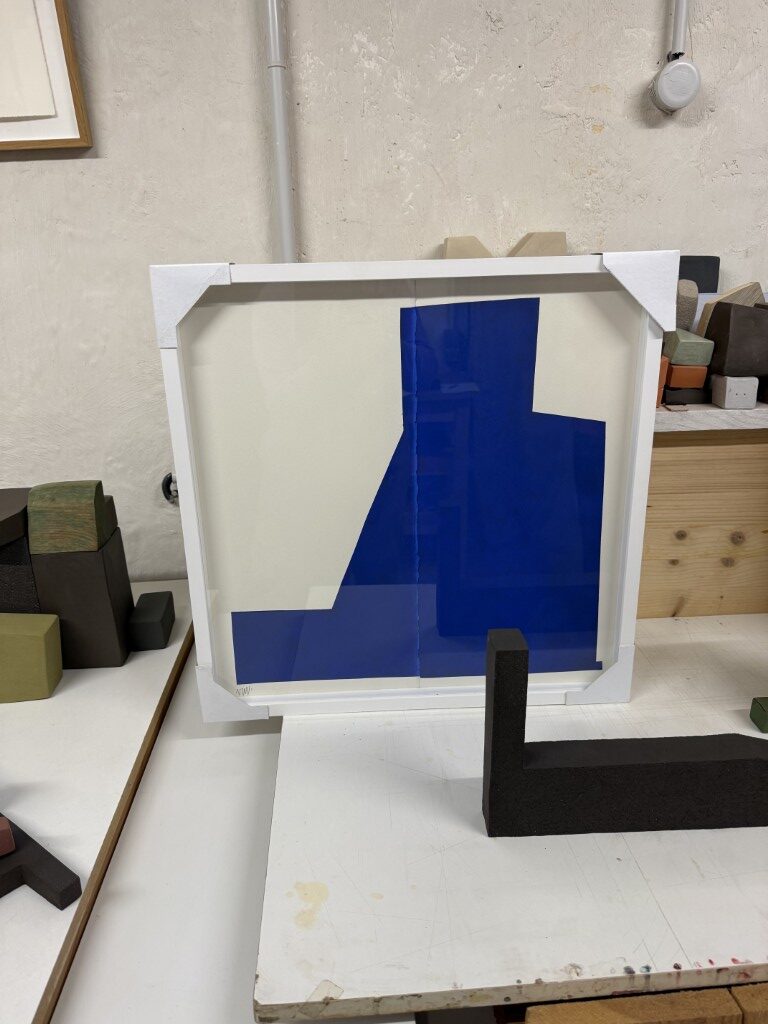
Dyptique pastel – bleu marine
€ 1.400,00 vat included -
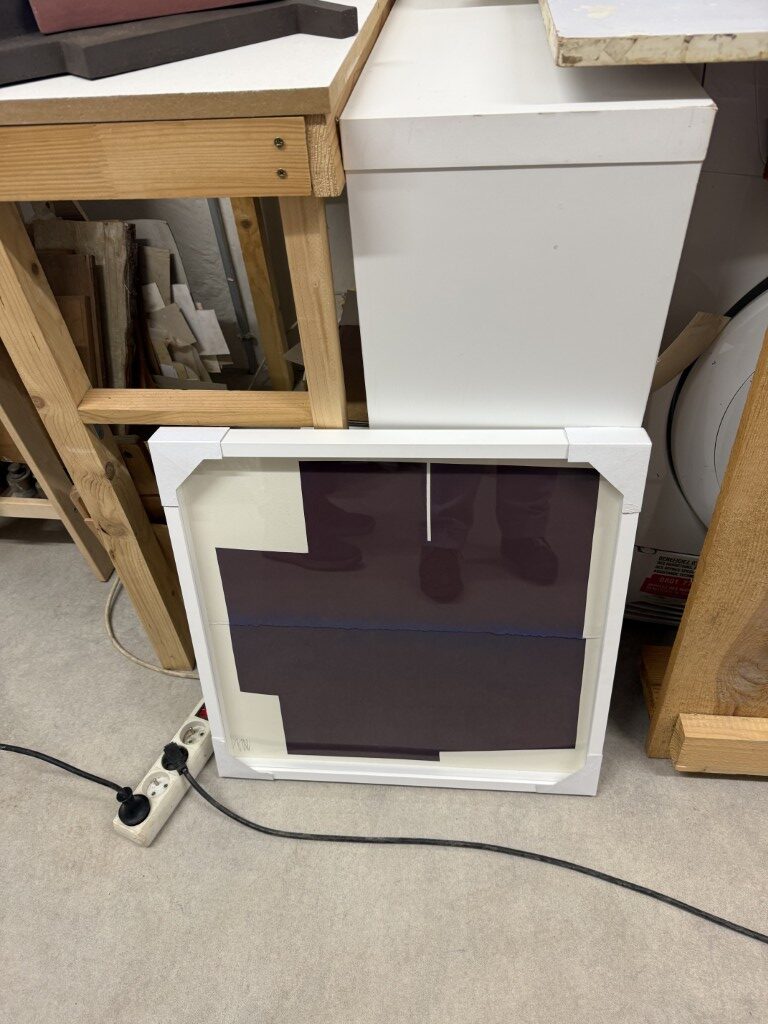
Dyptique pastel – indigo
€ 1.400,00 vat included -
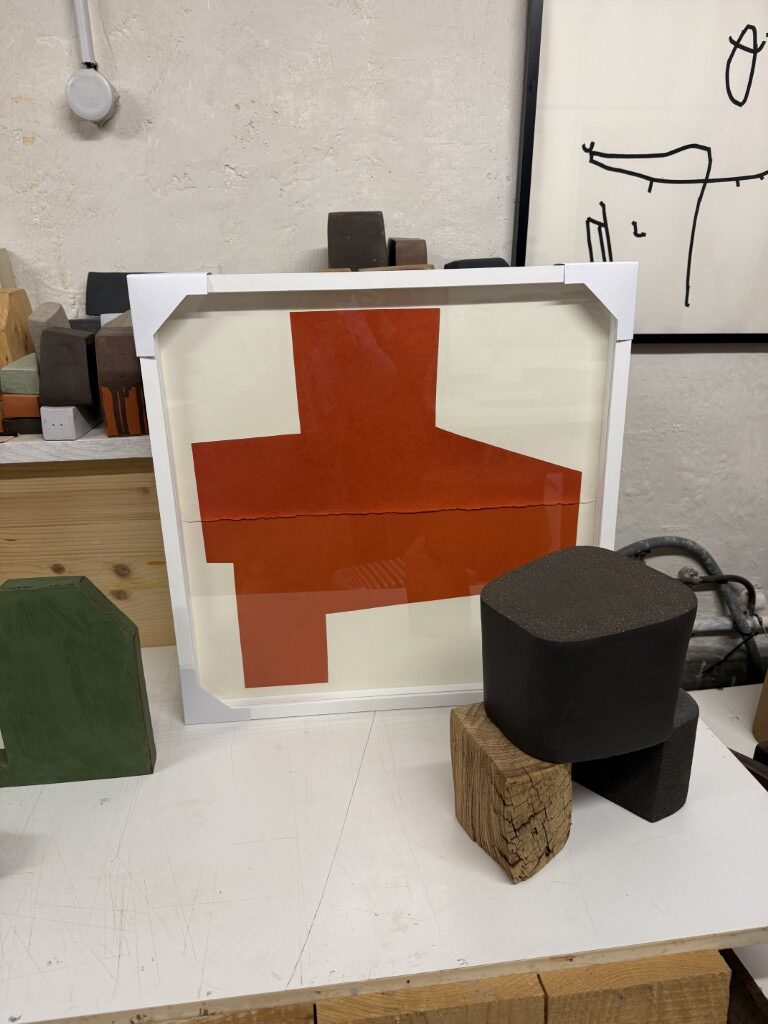
Dyptique pastel – rouge
€ 1.400,00 vat included -
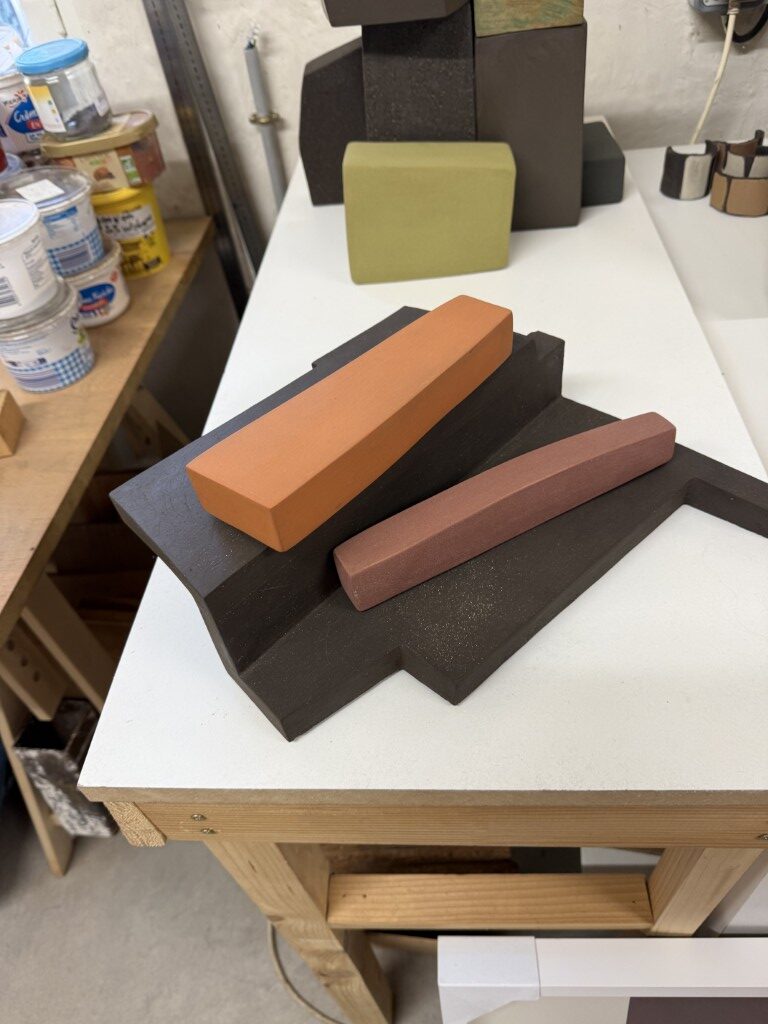
Pierre de terre
€ 1.400,00 vat included -
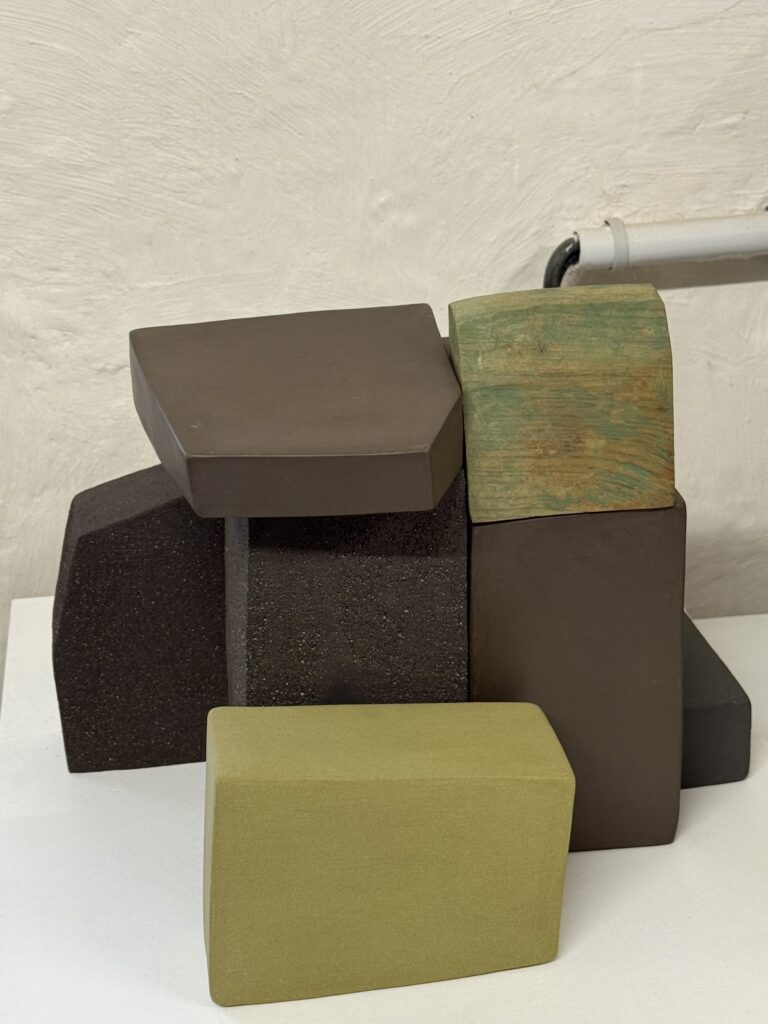
Pierre de terre – 7 elementen
€ 1.800,00 vat included -
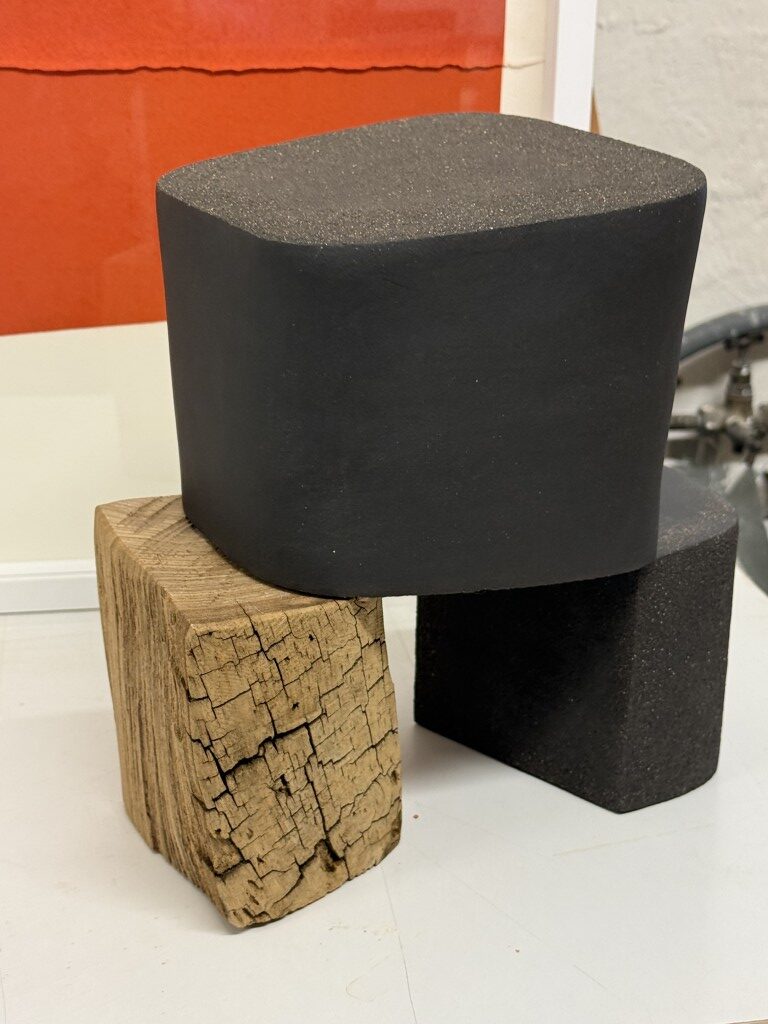
Pierre de terre – brun et bois
€ 1.400,00 vat included -
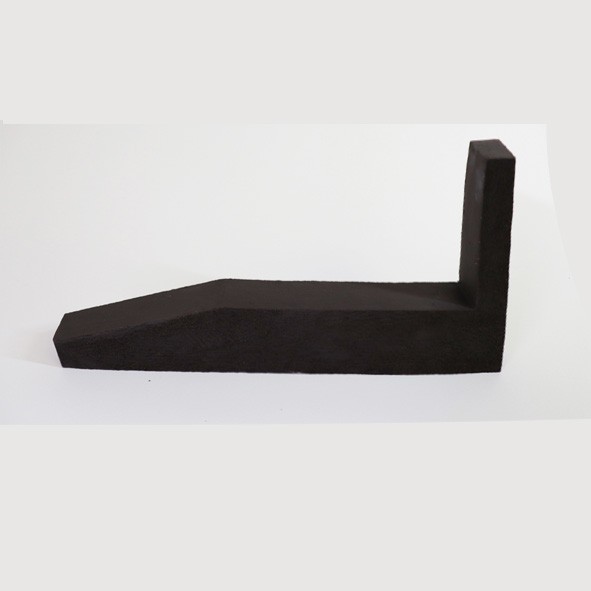
Pierre de terre – usine
€ 1.000,00 vat included -
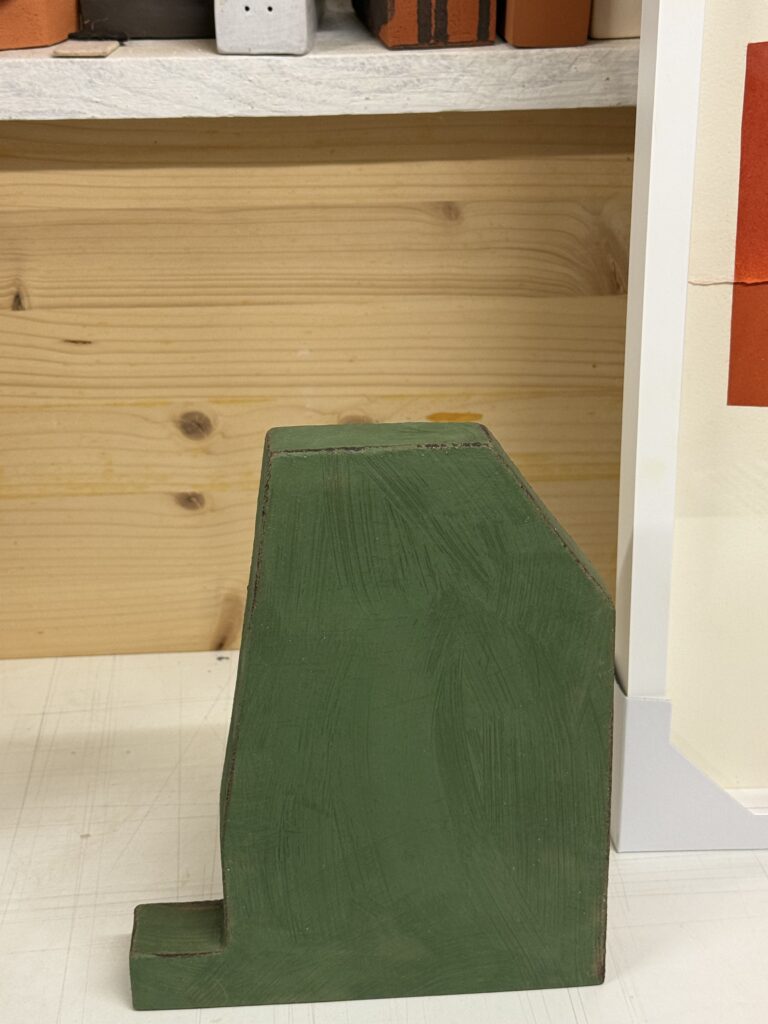
Pierre de terre – vert
€ 850,00 vat included